Celestial Mystical Font Review for Whimsical Branding
I was staring at a blank artboard last Tuesday, trying to crack the visual identity for a new artisanal candle line that needed to feel both earthy and ethereal. The brief called for something handcrafted but polished, a balance that is notoriously difficult to strike without veering into childishness or overly corporate sterility. This is exactly when I decided to test Celestial Mystical, a typeface that promises a blend of whimsy and structure. As an experienced brand designer, I have learned that display fonts often look beautiful in promotional graphics but fall apart when applied to actual packaging constraints or digital headers. After spending forty-eight hours integrating this font family into logo concepts, label mockups, and social media templates, I found that it offers a surprisingly versatile toolkit for niche branding projects, provided you understand its specific strengths as a decorative asset.
Celestial Mystical Fonts for Boutique Logo Design and Identity
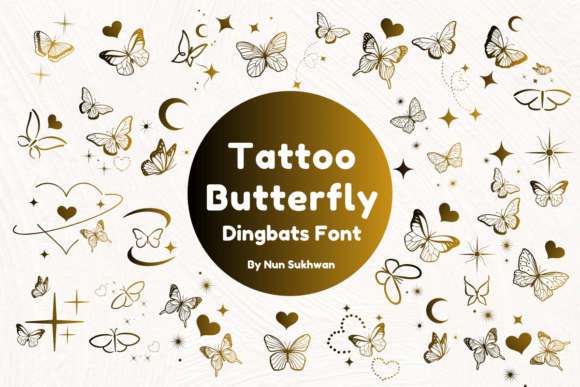
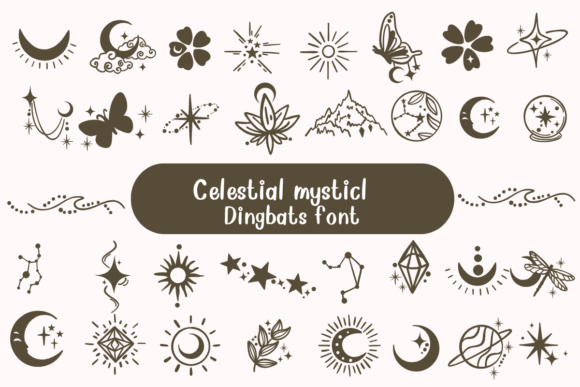
When evaluating Celestial Mystical for logo design, the first thing I noticed was how the letterforms hold up when scaled down for business cards and favicon use. Many novelty Fonts lose their legibility below 24 points, but this typeface maintains distinct character separation even at smaller sizes, which is critical for brand recognition across multiple touchpoints. I tested the primary display style on a wordmark for a fictional skincare studio, pairing it with a minimalist geometric sans serif to ground the composition. The result was a logo that felt bespoke and magical without sacrificing professional credibility. The Dingbats included in the package proved invaluable here; rather than searching for separate iconography, I was able to pull matching celestial motifs directly from the font file to create a cohesive lockup. This integration ensures that your illustrative elements share the exact same stroke weight and texture as your typography, creating a unified brand system that feels intentionally designed rather than assembled from disparate parts.
Testing Celestial Mystical Dingbats Doodle Cartoon on Packaging Mockups
Packaging design requires a different set of criteria than digital work, specifically regarding print clarity and shelf presence. I applied the Coloring Outline variation of Celestial Mystical to a cylindrical candle label mockup to see if the intricate details would survive the printing process. The outline style is particularly clever because it allows for two-tone color treatments; I filled the interior with a deep indigo while keeping the stroke in gold foil, creating a premium aesthetic that flat fills simply cannot achieve. For designers working in Affinity Designer Font workflows or Affinity Photo Font environments, the vector quality is crisp, meaning you can scale these doodles to fit any container size without pixelation. However, a word of caution: the Dingbats Doodle Cartoon elements are dense with detail. On textured paper stocks like kraft or uncoated linen, you may need to slightly increase the stroke width or simplify the design to prevent ink bleed. In my testing on smooth matte vinyl, the reproduction was flawless, making it an excellent choice for product labels where that handmade, storybook quality is desired.
Using Celestial Mystical ProcreateFont for Social Media Graphics
Social media content creation demands speed and flexibility, which is why the inclusion of a dedicated ProcreateFont file is a significant value add for iPad-based designers. I imported Celestial Mystical directly into Procreate to test its responsiveness with an Apple Pencil during a live lettering session for Instagram Stories. Unlike standard Otf or Ttf files that sometimes render poorly in raster apps, this specific format retained its anti-aliasing and curve smoothness perfectly. This makes it ideal for creating custom quote cards, announcement overlays, and behind-the-scenes content where you want the typography to feel organic and spontaneous. The Dingbats serve as excellent compositional anchors in square formats; placing a moon or star glyph in the negative space of a post helps guide the viewer’s eye without cluttering the message. For creators who manage their own brand assets, having a font that transitions seamlessly from desktop vector software to mobile illustration apps streamlines the production pipeline significantly.
Celestial Mystical Affinity Font Compatibility for Editorial Layouts
While primarily a display face, I wanted to see how Celestial Mystical performs in longer-form editorial contexts within Affinity Designer Font and Affinity Photo Font suites. It is important to be realistic here: this is not a body text font. Attempting to set paragraphs in this typeface will destroy readability and frustrate your audience. However, as a tool for establishing visual hierarchy in brochures, zines, or website hero sections, it excels. I used the bold display weight for chapter titles and pull quotes, contrasting it against a clean serif for body copy. The personality of Celestial Mystical injects warmth into otherwise rigid grid layouts, preventing editorial spreads from feeling sterile. When using the Affinity Font ecosystem, the OpenType features loaded correctly, allowing me to access alternate characters and ligatures without leaving the application. This compatibility is crucial for professional workflows where switching between programs to find a specific glyph breaks creative momentum.
Practical Licensing and File Format Considerations for Commercial Use
Before adding Celestial Mystical to your permanent toolkit, you must verify the licensing terms match your intended commercial application. The package includes both Otf and Ttf formats, ensuring broad compatibility across Windows, macOS, and various web platforms, but ownership rights vary by vendor. If you plan to use this font for client branding, merchandise, or digital products for sale, ensure your license covers commercial distribution and not just personal desktop use. From a technical standpoint, I recommend installing the Otf version for print and branding work due to its superior curve data and OpenType support, while keeping the Ttf handy for legacy software or specific web embedding needs. Also, always test the Coloring Outline and Dingbats Doodle Cartoon sets in your specific output environment before finalizing a design; what looks perfect on a high-resolution monitor may require adjustment for embroidery, laser cutting, or low-resolution web use. By treating Celestial Mystical as a specialized instrument rather than a universal solution, you can leverage its unique charm to build brands that feel genuinely enchanted and professionally executed.